
Cuban Bread
La Segunda has been going since the mid 1800s and was founded by a Cuban whose family originated in Spain. The same family still own the bakery and the recipe for the Cuban bread has remained unchanged since then.
Servings:0
Ingredients
Cuban Bread the way La Segunda bakes it
- 1 US quart of Water
- 1 oz Salt
- 2 oz Fast action yeast Or 4 oz dry yeast Or 8 oz fresh yeast
- 1 oz Sugar
- 3.5 lbs of Strong white bread flour
- 3 oz Vegetable shortening Or lard
- Palm leaf Strips So far so normal, until the palm leaf strips, right?
Instructions
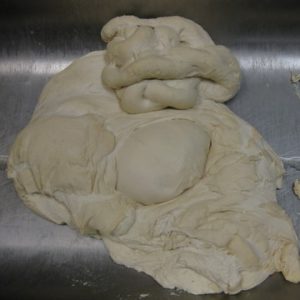
- Knead all the ingredients (except the palm leaf strip) for a good 15 minutes and let the dough rise for 45 minutes
- Shape into balls of dough about 6 oz each and let rise again for 45 minutes.
- Roll into six sausage shapes by flattening the ball (thunk) and then flipping it at great speed and skill over itself a couple of times and then dextrously pulling and coaxing into a sausage shape (sounds easy, huh? ha!) You can use a rolling pin if you prefer. Wet the palm leaf strips and press them hard into the top of the loaves.
- Place the loaves leaf side down, space apart to allow for expansion, cover and let rise for 45 minutes.
- Bake in a stone oven (pizza oven) if possible that has been preheated to 400 degrees F (200 degrees C) for 20-30 minutes.
- The dough is stiff rather than sticky so if you are using a machine, use the dough hook and put it on at low speed for 4 minutes and then at a higher speed for 6 minutes. You can use things like wet string, shoelaces, pieces of parchment paper in place of the palm frond. Or you can raid the glass houses at Kew Gardens. The purpose of the frond is to humidify the dough as it bakes.
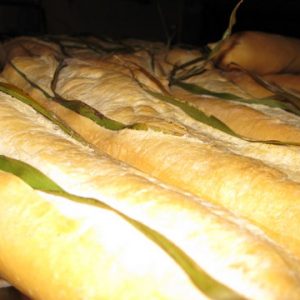
- Traditionally, cuban bread is three feet long! It was delivered, by bicycle or on foot, to the customers’ front doors. Every house had a nail next to the door and the delivery man impaled the three foot long loaf on the nail every morning so that it was off the ground, away from dirt and bugs. Some older houses in Tampa still have nails next to the front doors although bread is no longer delivered.

- The master bakers at La Segunda (there are four of them, and I met Tony Ali who has been baking since he was 16 along side the majority of his crew), use ice water and put the salt in first to retard the rising of the dough. In a colder climate (like here) you may want to use warm water and add the salt 5 minutes before the end of the kneading process to encourage the bread to rise. No dough is wasted! Old dough from yesterday is added to today’s mixture and the amount of yeast is then adjusted. Every day is different, every batch is different, every master baker is different. It’s impossible to standardise the flavour and texture of the bread and the master bakers would not have it any other way.
- Neither would we.